Sustainability that pays for itself
Proven solutions that deliver verified returns from day one.
Thermal Energy International
May 2015
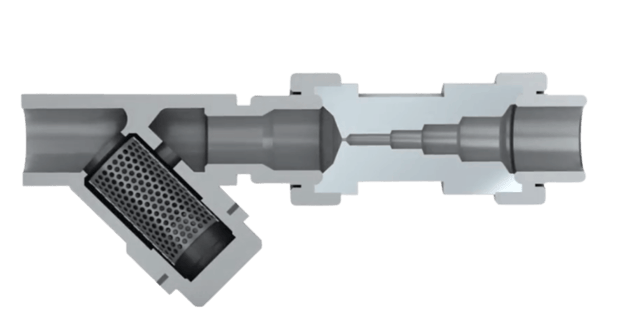
This article answers the core questions industrial steam users ask about venturi orifice steam traps: what they are, how they discharge condensate while retaining live steam, how they respond to changing condensate loads, and what to consider when selecting and sizing a trap for an industrial steam system.
A steam trap is designed to discharge condensate and non-condensable gases from a steam system with negligible consumption or loss of live steam. Conventional mechanical steam traps achieve this through an automatic valve that opens, closes or modulates in response to operating conditions. Orifice steam traps work differently: they have no moving parts and continuously remove condensate as it forms, allowing it to pass from the steam line into the condensate return system.
There are two main types of orifice steam trap: fixed, or plate, orifice traps and venturi orifice steam traps. Thermal Energy International’s proprietary GEM™ steam traps are full venturi orifice steam traps.
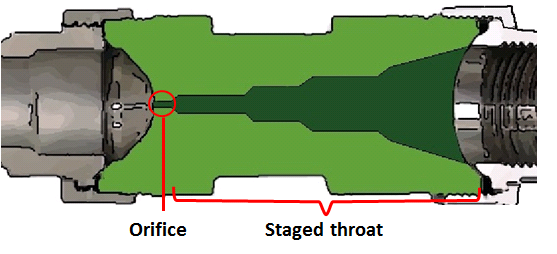
A full venturi orifice steam trap combines a calibrated inlet orifice with a multistage throat. Condensate passes through the inlet orifice from the higher-pressure steam system to the lower-pressure condensate return system. This pressure drop lowers the saturation temperature of the water, causing a proportion of the condensate to re-evaporate as flash steam.
At low pressures, liquid condensate is around 1,000 times denser than steam. In a small orifice, the denser condensate flows through the opening at a much lower velocity than steam. When condensate and steam are both present at the inlet orifice, the condensate occupies the opening and restricts the passage of live steam. The expansion of flash steam creates local back pressure, helping to maintain this condensate seal while protecting the orifice from erosion.
The staged throat downstream of the inlet orifice enables a full venturi steam trap to respond to changing condensate loads. It's configured for the application and its expected operating range. At lower flow rates, flashing occurs close to the orifice; as the load increases, the point of flash expansion moves further along the throat. This changes the local back pressure acting at the inlet orifice, allowing the trap to regulate its capacity while continuously discharging condensate.
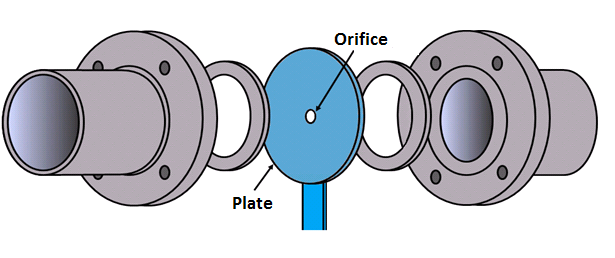
A fixed, or plate, orifice trap relies on the same pressure-drop and flash-steam principle, but consists of a small orifice machined into a plate. The size of that opening is determined by one anticipated condensate flow and differential pressure. If the condensate load falls below that condition, the local back pressure and condensate seal may no longer be maintained, allowing live steam to pass. If the load exceeds it, condensate can back up into the system, affecting process temperatures and increasing the risk of water hammer.
Venturi steam trap performance depends on matching the orifice and throat to the application.
Venturi inserts developed the fixed-orifice principle by placing a removable venturi component within the flow path. This can extend the operating range of a fixed plate design and allows the capacity to be changed where operating conditions alter. However, the final result depends on selecting and fitting the correct insert for the duty. An oversized insert can allow steam to pass, while an undersized insert can restrict drainage and lead to condensate backup.
A GEM™ steam trap is a different approach. The calibrated inlet orifice and extended multistage venturi throat are machined into a single-piece stainless-steel body and configured as one complete system for the application. There are no moving parts and no interchangeable insert. The longer staged throat is designed to maintain the condensate seal while accommodating changing condensate loads and differential pressures.
This places the emphasis on application-specific engineering rather than on an interchangeable component alone. Thermal Energy International sizes and commissions GEM™ steam traps against the operating conditions of the steam system, providing traceability between the application data used for sizing and the trap supplied.
For industrial steam users, correctly engineered full venturi technology offers benefits in energy performance, maintenance and process reliability.
Proven in demanding process industries and trusted by industrial customers worldwide, Thermal Energy International’s GEM™ steam traps combine decades of full venturi engineering to deliver long-term energy savings, reliability and performance.
Steam Trap Testing and Maintenance for Improved Energy Efficiency Steam has been a valuable source o...

Learn all about GEM™ Steam Traps here Steam Trap Failure and Maintenance Challenges Steam traps are ...

In recent years, steam systems have increasingly been branded as inefficient and a problem to mainta...