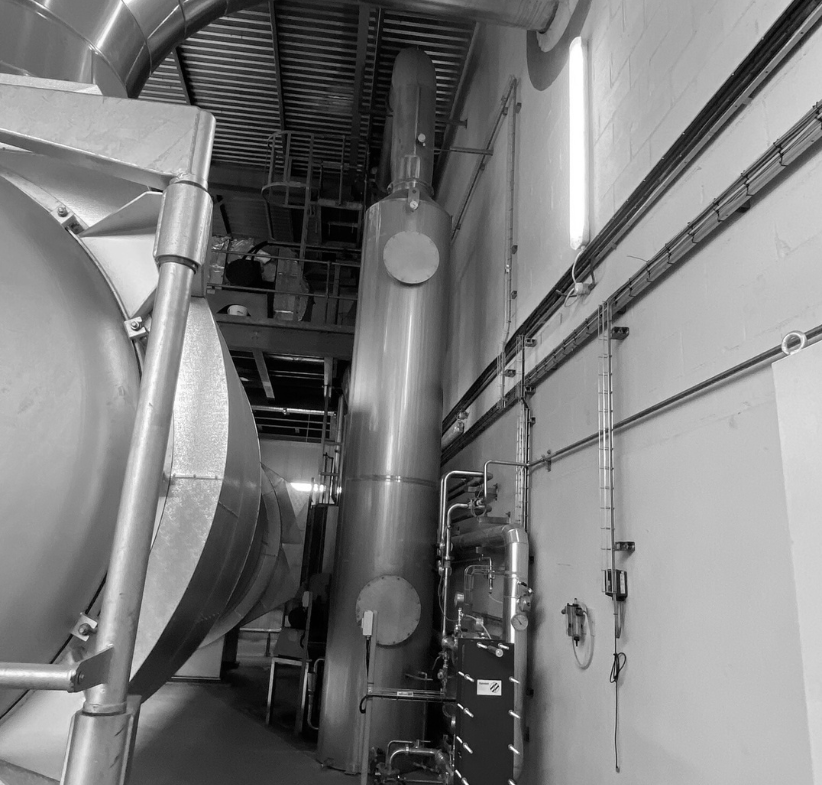
The project began with the phased installation of GEM steam traps, improving steam system performance and reducing maintenance. Thermal Energy International then introduced FLU-ACE technology, starting with a system that captures up to 6.8 MMBtu/hr of waste heat from two gas-fired steam boilers. This recovered energy supports key site processes, including preheating water for fermentation, heat exchangers, and providing warm water for sanitation and washdown.
By capturing waste heat from the boiler exhaust and redirecting it to these critical operations, the system reduces dependence on conventional heating and improves overall thermal efficiency. In its first year of operation, this installation helped the site cut emissions by more than 3,000 tonnes of CO₂.
Building on this success, three further systems were added in phases:
- A dryer exhaust recovery that captures waste heat from a natural gas dryer burner to support the site’s existing heat recovery loop and HVAC system, delivering an average of 1.9 MMBtu/hr, with seasonal variation.
- A boosted FLU-ACE system that captures 3.3 MMBtu/hr
(HHV) of energy from two dryer burners and redirects it to the dehumidifier intake and fluid bed dryer (FBD) air intake.
- An indirect system that recovers heat from the cooling air stream and uses it to preheat combustion and process air for the dryer lines. This eliminates the site’s electric cooling load and provides an additional 0.6 MMBtu/hr in energy savings.
Each installation was delivered on time and fully integrated into existing infrastructure, despite layout and access challenges. Thermal Energy International worked closely with site teams to ensure minimal disruption and full compliance with hygiene and safety standards.
As energy prices rise, the long-term value of reducing thermal waste and improving efficiency across the site will continue to grow — reinforcing the impact of the investment.