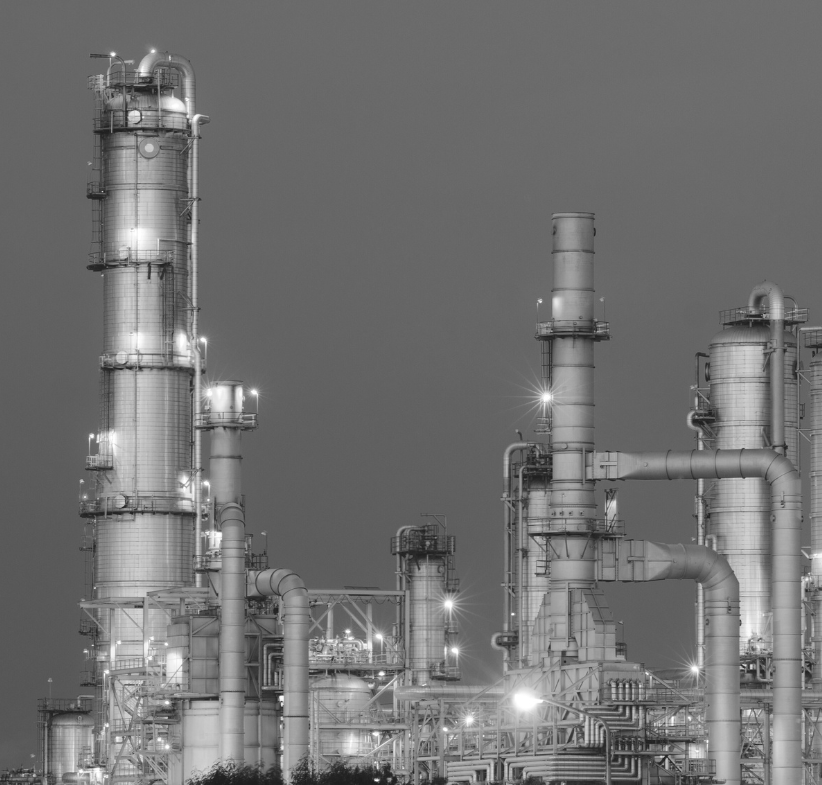
This facility uses steam to heat and maintain asphalt temperatures, so it flows smoothly through its transportation terminals. When these systems fail, the asphalt solidifies, jamming up the system and reducing the capacity of the terminal.
Steam is used throughout the terminal for trace heating systems designed to keep the product at correct viscosity. Trace heating systems have small diameter traps at regular intervals draining 5 to 10 kg/hr of condensate.
Rail car heating stations can consume several tons of steam per hour, and are used to bring asphalt from ambient temperature to 149°C to transfer from the rail cars into storage tanks.
The facility was using mechanical traps that were failing in as quickly as a couple of days to one week. Thermal Energy International engineers performed a steam meter test comparing new thermodynamic traps against a GEM Steam Trap on two separate tank cars. The results proved the GEM Trap to be 35% more efficient.
The steam to the tank cars was turned on and temperatures were taken at intervals over the course of 22 hours. Results demonstrated that the GEM Traps allowed the rail cars to heat up faster and more uniformly.
The customer was so pleased with the results that they subsequently ordered GEM Traps for over 60 additional stations as part of an upgrade and expansion.
The GEM Steam Traps have been successfully installed for more than ten years, and continue to save steam, energy and CO₂ whilst reducing maintenance and production.