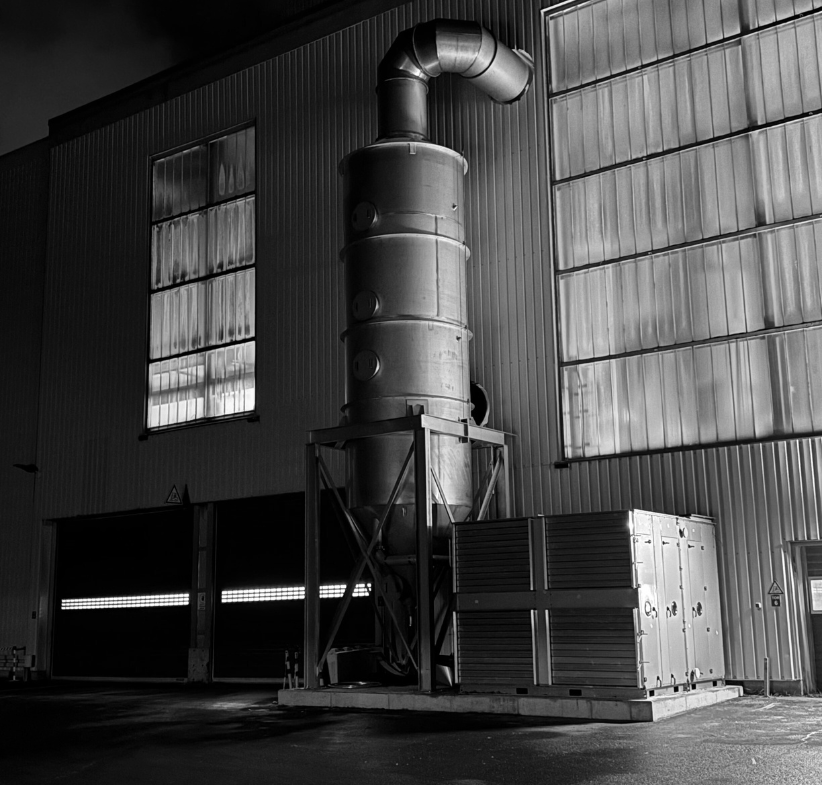
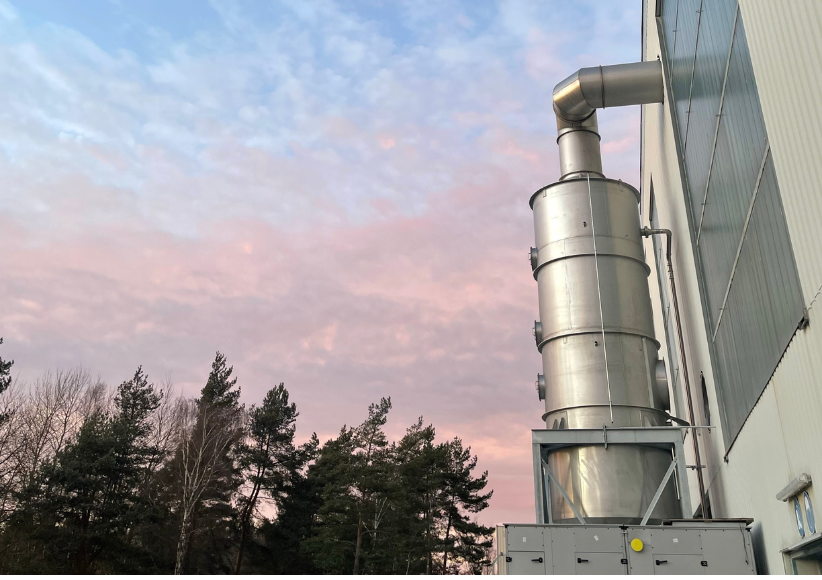
Thermal Energy International delivered a turn-key FLU-ACE direct contact heat recovery system that captures waste energy from one of the site’s three spray dryers and reuses it to preheat the slurry feed and combustion air across the plant. The customer originally became aware of the proprietary technology following an acquisition, where it proved successful at two existing sites. This project therefore represents the third heat recovery and carbon reduction solution delivered across the customer’s European operations.
The system was engineered to overcome several unique process challenges, enabled by Thermal Energy International’s deep industry experience, advanced engineering capability, and integration of the customer’s process knowledge gained through previous site collaborations.
A robust solution for dust-laden exhaust
FLU-ACE's direct contact design enabled reliable energy recovery where conventional exchanger-based systems would have failed. Its conical base and settling plates manage particulate effectively, while spray nozzles in the ductwork keep surfaces clean and prevent dust build up. The downstream fan is engineered for continuous operation under negative pressure. Together, these features provide a stable, low maintenance platform for long term recovery in a demanding exhaust environment.
Turning slurry into a reliable heat sink
Plate and frame exchangers now preheat more than 5,000 tonnes of slurry each month from 10°C to 50°C. Automated flushing and operating protocols prevent solids deposition, ensuring continuous operation and protecting product quality. The result is a proven, low-maintenance application of waste heat that now delivers substantial energy savings and can be replicated across the customer’s wider operations.
Stable combustion air in every season
Recovered heat is transferred via a closed glycol loop to outdoor air make up units serving all three spray dryers. The glycol system incorporates antifreeze protection, ensuring reliable operation in winter while avoiding the filter clogging issues of indoor air. This provides stable preheated combustion air year-round, with customer verified bump test data confirming a 20% reduction in gas use on a single dryer.
Uninterrupted production
The system is fully fail safe, automatically reverting to the original burners and steam heaters in the event of a shutdown. This guarantees production continues seamlessly, while integration with the plant’s SCADA system provides real time monitoring, automated safeguards, and transparent metering of recovery. Operators therefore have confidence that verified savings are delivered without any risk to output or product quality.
This project demonstrates that even the most energy-intensive drying operations can be decarbonised reliably and at scale. The customer highlighted both the technical achievement and the collaboration behind it:
Besides the technical challenge, this success was made possible by the great – and sometimes challenging – multicultural collaboration between our German operations teams, our Centre of Expertise, and our partners at Thermal Energy International.