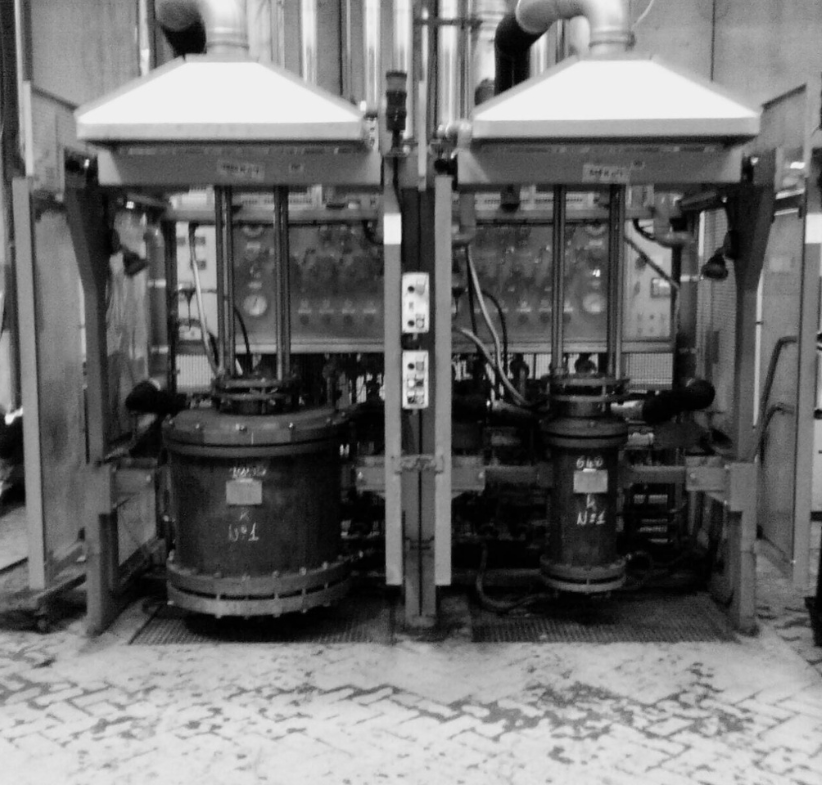
Rubber Processing Plant
GEM Steam Traps have remained in continuous service for over 15 years, maintaining precise temperature control and reliable condensate handling under highly variable vulcanisation loads.
Tyre & Rubber
Italy
GEM™ Steam Traps

A leading manufacturer of timing belts for the automotive and white goods sectors relies on precise steam control during the curing process to ensure long-lasting, high-quality products. Since early 2008, over 250 GEM Steam Traps have been installed at the customer’s facilities. These traps remain in operation more than 15 years later, well beyond their 10-year performance guarantee
The production setup features fixed steam supply and condensate return lines, with autoclaves connected via flexible pipework. This configuration enables production flexibility, as autoclaves of varying sizes can be moved into position. However, it also requires steam traps that can reliably handle a wide range of condensate loads, depending on the autoclave in use.
Since their installation, GEM Steam Traps have consistently performed across these varying loads. Production data confirms that the system remains within the tight 1°C temperature variation limit required for vulcanisation, even as condensate demand fluctuates significantly. As steam comes into direct contact with rubber during curing, dirt and debris are introduced into the condensate system.
Previously, this contamination led to frequent failures of mechanical steam traps, either through blocked orifices (causing failure in the closed position) or obstructed mechanisms (resulting in traps stuck open and live steam losses).
Thermal Energy’s inverted cone design and integrated multistage filtration effectively mitigate these issues by directing debris away from the discharge orifice, significantly reducing blockages.
Additionally, the customer noted substantial maintenance improvements. With conventional traps, clearing blockages required full removal and off-site servicing, taking up to two hours.
In contrast, GEM Steam Traps can be cleaned in-line using a dedicated tool, reducing maintenance time to just five minutes and eliminating unnecessary process downtime.
The site’s primary steam-consuming process is rubber belt vulcanisation, carried out in custom-designed autoclaves. The autoclave selected for each run depends on the belt’s diameter and profile, with the largest units requiring up to five times more steam than the smallest.
GEM Steam Traps are installed in the fixed pipework serving the vulcanisation booths, accommodating the full range of autoclave sizes. This application showcases the traps’ ability to maintain optimal performance under highly variable steam loads, ensuring reliability regardless of batch size or equipment used.
.jpg?width=1600&height=1200&name=030113-1441%20(4).jpg)
If variable steam loads, contamination, or recurring mechanical trap failures are affecting process control or maintenance effort in rubber or tyre manufacturing, our team can assess whether a GEM Steam Trap retrofit could deliver similar long term reliability and performance.