Major International Meat Producer

Third-party verification of GEM™ Steam Trap performance led to deployment across the site, reducing avoidable steam losses, delivering certified energy savings and providing a validated basis for wider rollout across the group.

meat icon
Industry

Meat Processing

location icon
Location

Poland

settings_834938
Solution

GEM™ Steam Traps

M05 Major International Meat Producer

277  
tonnes

Annual CO₂ reduction

<
10  
months

Payback before funding

80
%

Project cost covered by white-certificate funding

The company is one of the largest meat producers in its region, supplying a broad range of fresh meat products to domestic and international markets. As part of a major international meat-processing group, it operates at significant scale within an established global export network. The wider group has also established a science-based emissions-reduction target for 2030, increasing the focus on measurable energy-efficiency improvements at individual production sites.

Widespread steam-trap failures driving avoidable steam loss

A site-wide survey found that 29% of the trap population was confirmed to be malfunctioning. 20% of the installed steam traps had failed open or partially open, allowing live steam to pass into the condensate system. A further 9% had failed closed, preventing effective condensate drainage.

Across the malfunctioning traps identified for replacement, avoidable annual steam losses were estimated at more than 2,200 tonnes. Open failures increased steam and boiler fuel demand, while closed failures created the potential for condensate accumulation and impaired heat transfer.

To address the immediate steam losses and reduce the risk of recurring mechanical-trap failures, the company proceeded to evaluate GEM as a more reliable long-term alternative under live production conditions.

GEM performance independently verified under live production conditions

GEM uses a fixed venturi orifice to discharge condensate without the moving components found in conventional mechanical traps. Each trap is individually sized for the pressure conditions and condensate load at its specific installation point.

A third-party study verified GEM Steam Trap performance using two methods: a bucket test comparing steam loss through GEM and a correctly operating float steam trap, and a nine-month operational trial across selected production applications.

Conducted in accordance with ISO 5117:2023, the bucket test found that GEM reduced measured live-steam loss by almost 65% under equivalent site conditions. This demonstrated that savings could be achieved even where the existing mechanical trap was still considered operational.

The operational trial assessed six GEM Steam Traps installed on operating equipment across the facility’s smokehouse, CIP, sausage and offal production areas. Over nine months, the study examined whether the traps could accommodate changing condensate loads and operating conditions, and whether contaminants within the steam and condensate system could block the venturi orifice.

All six GEM Steam Traps operated correctly throughout the trial, with no failures or blockages recorded. The study concluded that they provided sufficient operating flexibility for the production applications assessed. Temperature monitoring also demonstrated more stable performance than the mechanical traps.

Following the successful testing and verification, the company expanded the use of GEM Steam Traps across production and utility applications.

Certified savings support wider rollout

The GEM installation generated independently certified energy savings that qualified the project for white-certificate funding covering 80% of the project cost. This substantially reduced the company’s net investment in a project that already achieved payback in under ten months before funding. 

With performance proven through operational testing, independent verification and full-site deployment, the project now provides a repeatable model for further GEM Steam Trap installations across the wider group.

Recovering high-value heat from meat-processing operations

The GEM installation addresses losses within the steam and condensate system. Across meat-processing operations, further opportunities may exist to recover heat from boiler and process exhausts, reduce the energy required for hot-water generation and reuse the high-temperature heat released during singeing. 

Boiler and process exhaust heat recovery

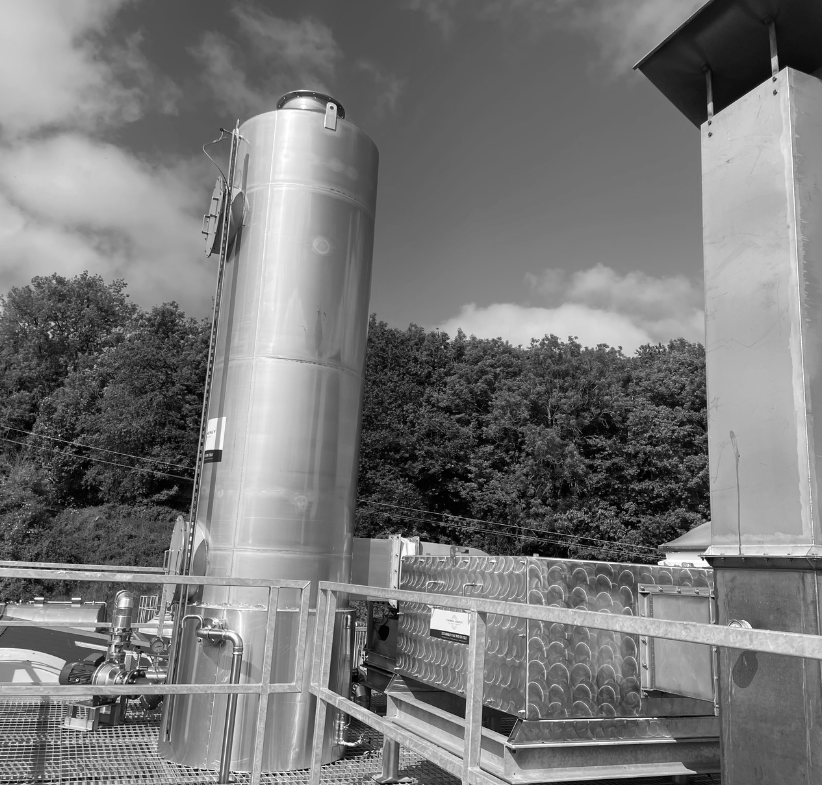
FLU-ACE™ can recover both sensible and latent heat currently discharged through boiler flues and other process exhausts. The recovered energy can be transferred into hot water for scalding, washdown, sanitation, CIP and other continuous process demands, directly reducing boiler fuel consumption and emissions.

M02 Leading Meat Producer

Singeing exhaust heat recovery

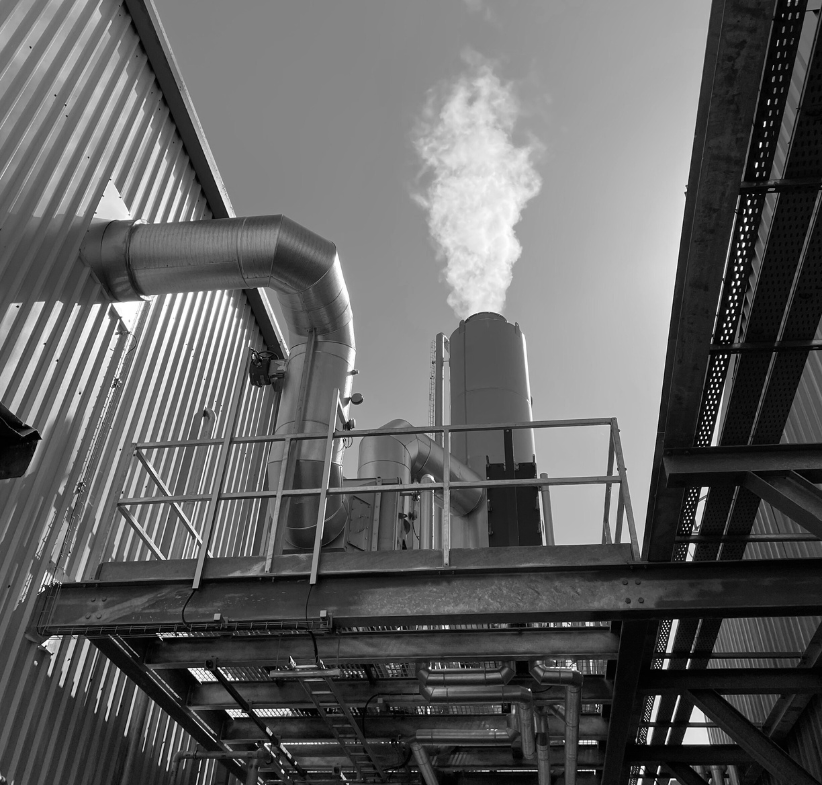
Where singeing is used, the high-temperature exhaust represents a significant source of recoverable energy. Captured heat can be returned to scalding water, wash-water or other lower-temperature process duties, reducing fuel demand elsewhere in the plant.

M01 Meat Processing Plant

More efficient generation of high-volume hot water

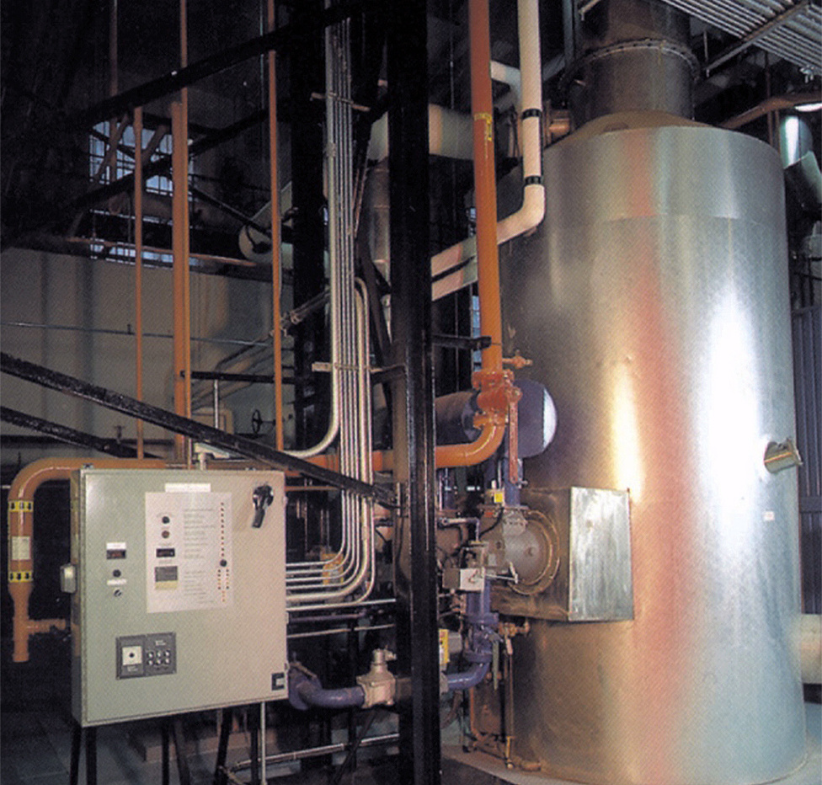
PERCO-ACE™ heats water directly using heat from natural gas combustion, avoiding the losses associated with producing steam and then converting it back into hot water. It can supply large and rapidly changing demands for washdown, sanitation and processing at temperatures up to 85°C, either as a standalone system or to meet the remaining load after available waste heat has been recovered.

PERCO-ACE installed on site

Speak to our team

Meat-processing facilities can lose significant energy through steam systems, boiler and process exhausts, and inefficient hot-water generation. Our team can assess the wider site opportunity and identify where GEM™ Steam Traps, heat recovery and more efficient hot-water systems could reduce fuel use, emissions and operating costs without compromising production.

Get in touch