.png?width=512&height=512&name=tobacco%20(2).png)


At this high-throughput tobacco manufacturing site in Poland, steam is integral to production, where steam performance directly influences:
- Moisture control in paper handling and forming
- Thermal stability in drying and expansion stages
- Heat transfer efficiency in jacketed mixing systems (aroma/sauce preparation)
- System-wide distribution reliability under variable loads
In this environment, condensate management is not just a utility concern, it’s process-critical. Any accumulation or live steam loss translates immediately into inefficiencies, variability, and increased operating cost.
Operational Inefficiencies from Failed Steam Traps
The steam system relied on conventional mechanical traps operating under continuous load conditions. Failure rates were high, with both blockage and live steam loss observed across the trap population.
This created a maintenance-intensive environment under outsourced utility management, with frequent intervention required to sustain operation.
In practice, the issues presented as:
- recurring trap failure across distribution and process locations
- inconsistent condensate removal at humidification systems, dryers, and jacketed equipment
- loss of heat transfer efficiency at point of use
- reduced ability to maintain stable thermal conditions under variable load
A structured steam trap survey was carried out across the site. Each location was assessed for operating condition, pressure, temperature, and application duty, providing a consistent, site-wide view of steam system performance beyond routine maintenance activity.
Steam System Upgrade Across Critical Process Areas
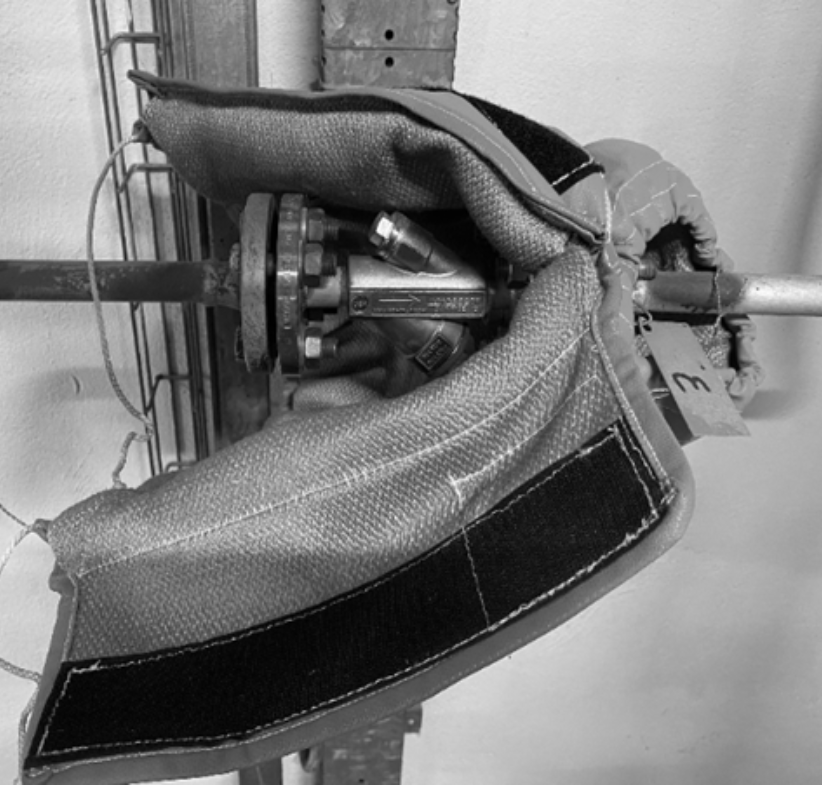
A phased replacement program was implemented, upgrading mechanical traps to GEM steam traps across boiler house headers, distribution networks, and process equipment.
Each unit was engineered and calibrated to match the operating conditions of its application, using a full Venturi design to enable continuous condensate discharge. This removes the cyclical failure and replacement associated with mechanical steam traps, maintaining consistent performance over time and eliminating the need for routine failure identification and replacement activity to sustain operation.
As a result, condensate removal across the system became stable, with consistent conditions maintained at humidification systems, dryers, and jacketed processes. Heat transfer at point of use improved and steam losses were reduced, while the requirement for ongoing maintenance intervention was significantly lowered.
Site maintenance teams were briefed on operation and monitoring procedures. The project was communicated internally across the site, reflecting adoption of the new steam system standard.
The upgrade qualified under Poland’s White Certificate scheme, confirming measured reductions in steam loss and improved thermal efficiency.
Improving Thermal Efficiency While Protecting Production Stability
Tobacco production places exceptional demands on steam systems, with conditioning, casing, drying, humidification, expansion, line drainage, and distribution all relying on stable condensate removal and consistent heat transfer. Across high-throughput manufacturing environments, even small inefficiencies in steam performance can affect energy use, maintenance demand, process reliability, and production consistency. With proven experience across major tobacco manufacturing operations and critical process applications, Thermal Energy International helps tobacco producers identify and improve steam and condensate performance where it has the greatest operational impact.
.png?width=822&height=785&name=Tobacco%20(1).png)
Explore more GEM™ case studies
Speak to our team
If you are exploring how to cut energy use, reduce emissions or assess the viability of steam, heat recovery or hot water solutions for your site, our team can help you understand what is possible.
- Identify where energy is being lost
- Understand the most effective efficiency improvements for your site
- Gain clear guidance on performance expectations and practical implementation