Industrial Heat Recovery
Recover up to 90% of wasted energy, cut fuel use and emissions, and take a practical step toward decarbonisation.
Recover up to 90% of wasted energy, cut fuel use and emissions, and take a practical step toward decarbonisation.
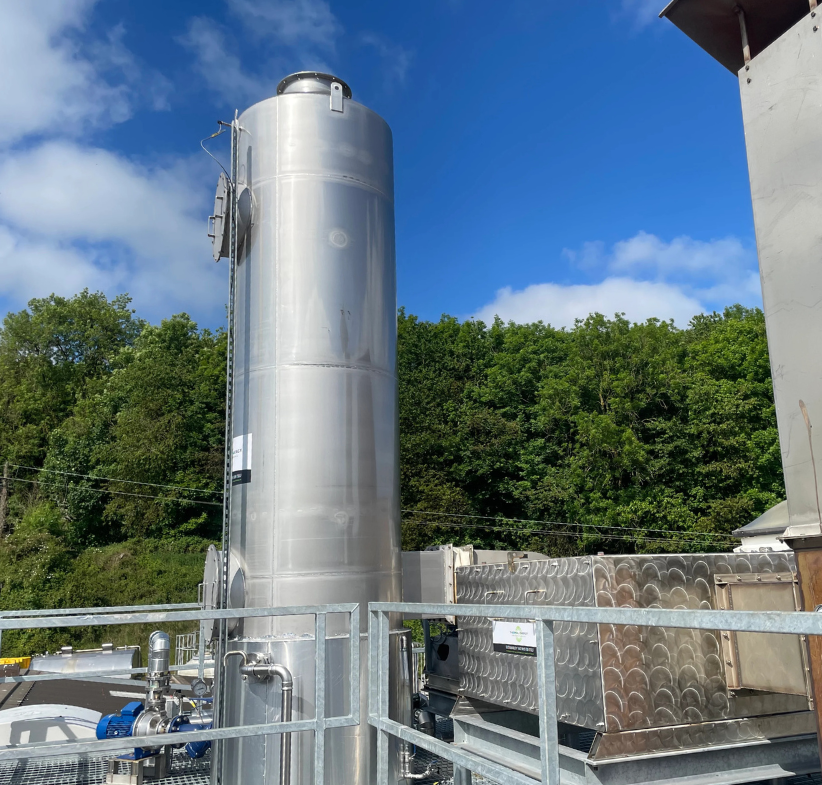
In most industrial plants, 10–20% of fuel input is lost up the stack, but up to 90% of this wasted energy can be recovered and recycled into useful hot water for process or heating. Global outlooks recognise that while electrification is growing, cost and infrastructure mean industry still relies heavily on fossil fuels. This makes immediate measures such as waste heat recovery essential for near-term progress.
Thermal Energy International’s proven industrial heat recovery systems deliver immediate, low-risk savings without major disruption, providing both a practical step toward net zero and a long-term foundation for deeper decarbonisation.
Thermal Energy International's proprietary heat recovery technologies provide the foundation for each project.
Where additional solutions such as heat pumps add value, they are integrated seamlessly with the same discipline and precision.
These projects show how engineered heat recovery solutions have been successfully applied in live industrial environments, delivering sustained energy savings, emissions reductions, and reliable performance under real operating conditions.
From the outset Thermal Energy International work alongside your team to understand your strategic goals, operating realities and compliance requirements, combining global expertise with local knowledge to shape solutions that fit your site. We turn complex options into practical projects that reduce costs and carbon today while strengthening the path to long-term goals.
Thermal Energy International can deliver as a Turn-key partner with guaranteed outcomes or support your team with equipment and engineering expertise. The result is consistent delivery and responsive support wherever you operate.
Historically, the challenge in waste heat recovery was the low temperature of the recovered heat, which restricted its use to applications such as space heating or cold water preheat.
With FreeSteaming™, this heat can be elevated to process temperature hot water or even steam through the integration of modern heat pumps and mechanical vapour recompression (MVR), enabling almost all available waste heat to be reused where required.
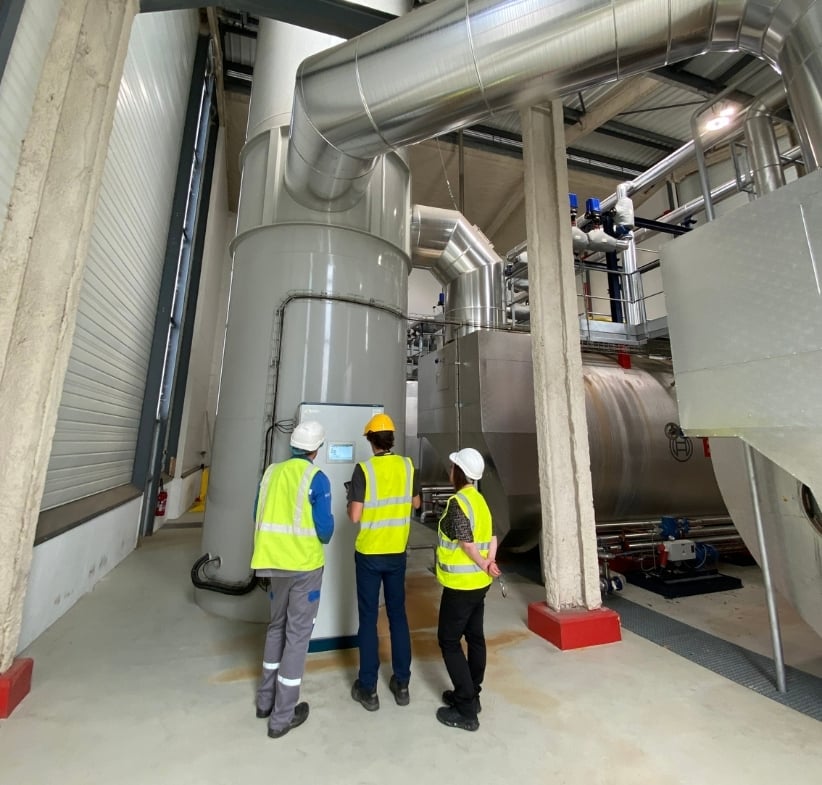
Direct contact systems mix the flue gas with a circulating water stream, allowing both sensible heat and latent heat from water vapour to be recovered through full condensation of the exhaust. This delivers higher thermal efficiency and very low stack temperatures.
Indirect contact systems keep the flue gas and water separate, transferring heat across tube surfaces. This makes them suitable where process requirements or water quality considerations demand separation, or where higher outlet temperatures are needed.
Both approaches have distinct technical advantages, and having access to both ensures the most appropriate waste heat recovery systems can be applied for each site and application.
Direct contact heat recovery is highly effective where the heat user is larger than the available waste-heat source, ensuring that all recovered energy can be fully utilised. Because the process operates as a wet scrubber, it handles particulate-laden or contaminated gas streams well and provides strong inherent pollution control.
The absence of heat-transfer surfaces exposed to flue gas contaminants greatly reduces the risk of fouling, allowing direct contact systems to maintain high thermal performance over long service lifetimes, often extending beyond 30 years.
Indirect contact heat recovery is most effective when higher outlet temperatures are required or when a simpler installation provides the best economic return. These systems can often be integrated in the same way as traditional economisers, with no need for additional fans, pumps or complex controls. This simplicity reduces installation effort, lowers operational overheads and delivers reliable high-temperature heat recovery where process conditions demand it.
Yes. Conventional economisers only recover sensible heat, while condensing systems capture latent heat as well, typically offering three to five times the savings of a standard economiser.
In many cases, yes. A single condensing unit can be designed to recover heat from several boilers or process exhausts, reducing capital cost and increasing return on investment.
Recovered hot water is typically delivered at 60–80°C depending on the system and application, which is suitable for process duties, heating and boiler make-up.
Fuel savings of 10–35% are common depending on site conditions, with typical payback periods ranging from two to five years and long equipment lifespans of over 20 years.
No. Systems are designed to integrate with existing boilers and heating infrastructure. In the event of shutdown, your existing equipment continues to operate as before.
Yes. Many of the solutions can be delivered as equipment only with specification and commissioning support, or as full Turn-key projects with fixed price and guaranteed savings.
Very little. Systems are built in stainless steel for long life and are designed for minimal intervention, with no additional burden on site staff.
Heat recovery systems are often the most cost effective first step, capturing energy that would otherwise be wasted. In some cases, a heat pump can then be added to lift the recovered heat to a higher temperature, making it useful for more applications. By integrating the two, sites can maximise the value of recovered energy and achieve even greater returns, whether the driver is cost savings, carbon reduction or both.
Proven solutions that deliver verified returns from day one.
If you are exploring how to cut energy use, reduce emissions or assess the viability of steam, heat recovery or hot water solutions for your site, our team can help you understand what is possible.