


Brewing at Scale in a Heritage Facility
This facility is the oldest continuously operating, large-scale brewery in the United States, producing nearly six million barrels annually. Its heritage reflects more than a century of uninterrupted industrial brewing. As a result, the site operates a complex blend of legacy and modern systems.
Its long operating history, combined with modern production volumes, creates sustained, high-intensity thermal demand. Maintaining energy efficiency while preserving process stability and product quality is therefore critical not only to day-to-day performance, but also to extending the useful life of legacy infrastructure and enabling long-term decarbonisation.
These conditions create several structural challenges common to long-established breweries:
- Legacy thermal plant and distribution systems, often designed around higher steam intensity and less efficient heat rejection assumptions
- Limited space and fixed layouts, restricting large-scale boiler replacement or electrification without major disruption
- High and variable thermal demand, driven by wort boiling, CIP, pasteurisation, and packaging operations layered onto historic utilities
- Increased sensitivity to reliability, where unplanned downtime directly impacts production continuity and brand-critical quality assurance
- Decarbonisation pressure without wholesale asset replacement, requiring efficiency and heat recovery solutions that integrate with existing equipment
Within this context, waste heat recovery and steam-side optimisation represent particularly effective pathways. They reduce fuel consumption and emissions while extending the useful life of existing assets, improving thermal resilience, and supporting long-term decarbonisation planning without compromising brewing quality or operational continuity.
From Stack Losses to Process Heat
To address avoidable thermal losses and reduce boiler fuel demand, the site implemented two complementary boiler-side heat recovery systems designed to integrate seamlessly with existing brewing operations.
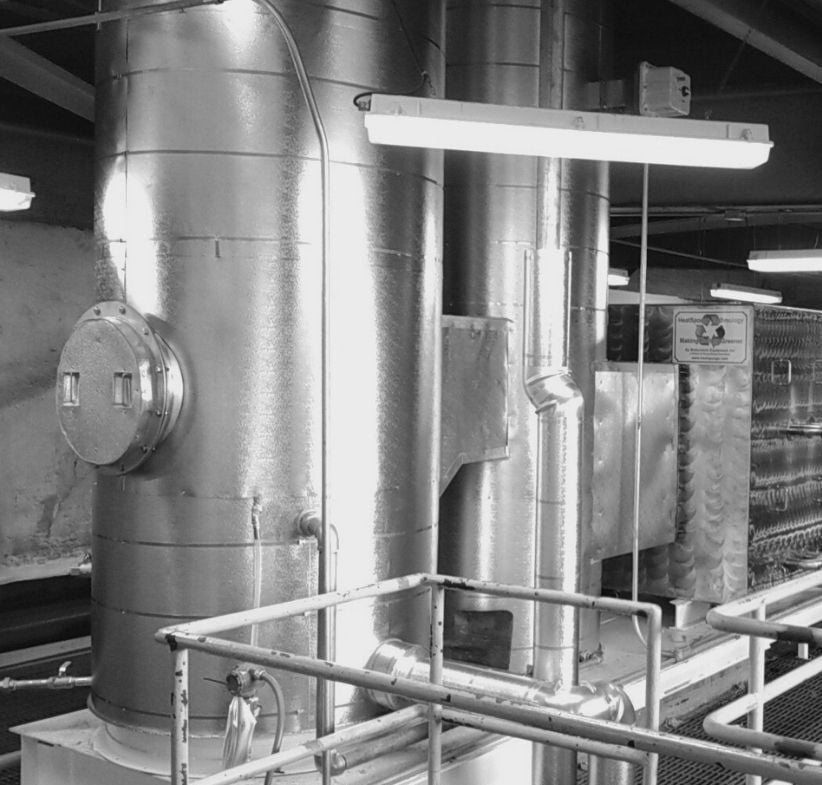
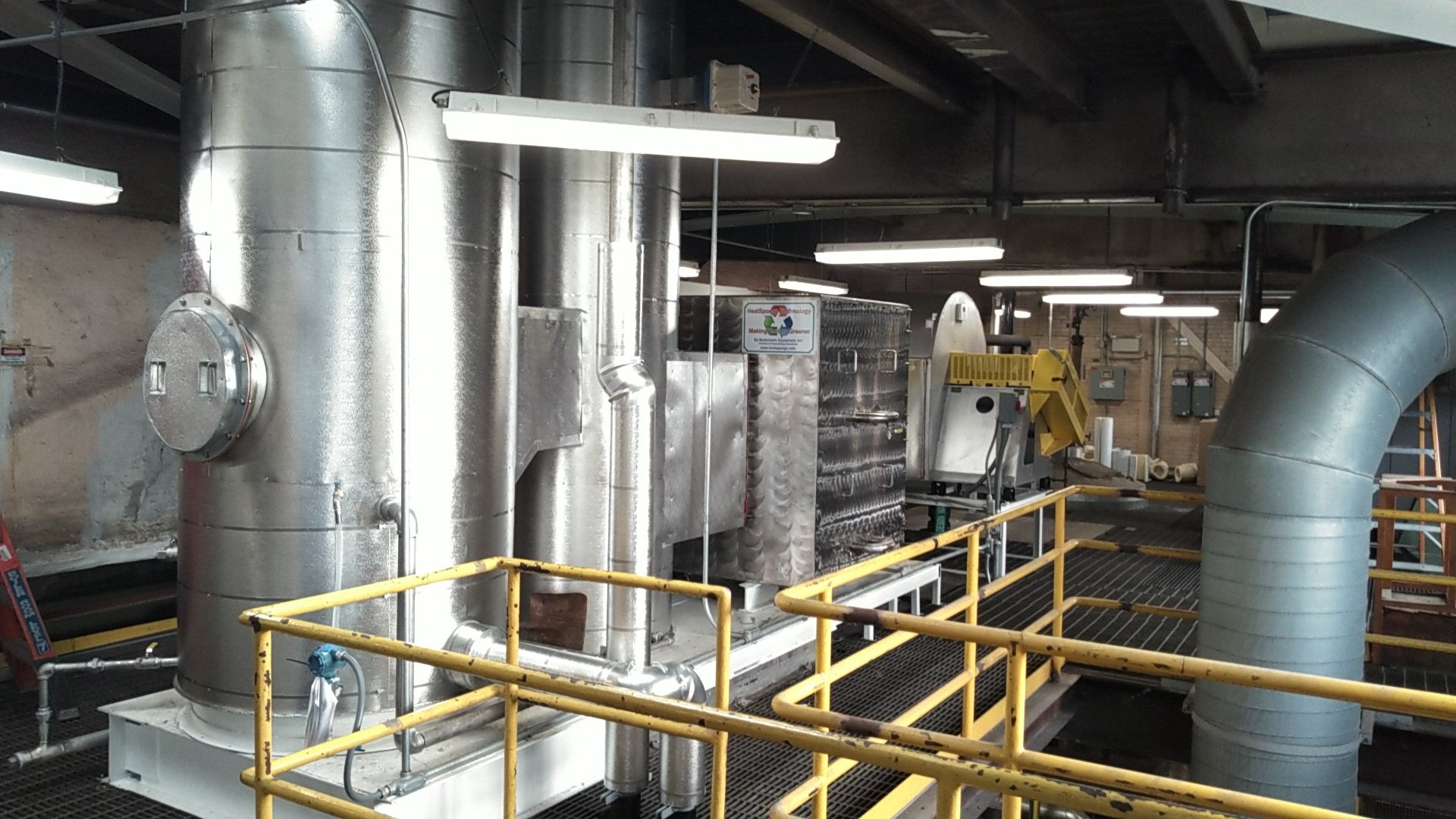
A FLU-ACE direct contact condensing heat recovery system was installed on the boiler exhaust to capture waste heat from flue gas that would otherwise be lost to atmosphere. Recovered energy is used to generate hot water for multiple onsite demands, including preheating fresh reverse-osmosis makeup water, returning condensate to the deaerator, and supplying domestic makeup water. By converting stack losses into usable thermal energy, the system reduces boiler firing requirements while maintaining brewing, hygiene, and CIP performance.
HeatSponge boiler economizers were also deployed to recover additional sensible heat from exhaust gases, further improving overall boiler efficiency and reducing fuel input.
Together, these systems are expected to deliver water savings of roughly 8 million litres per year and carbon emissions reductions of more than 1,800 metric tonnes annually. With available utility incentives, the combined project provides a customer payback period of just under four years, delivering a financially robust reduction in fuel use and Scope 1 emissions within a legacy brewing environment.
.jpg?width=822&height=785&name=BR01%205050%20%20(1).jpg)
Turning Brewing Efficiency into Scalable Impact
This project follows a highly successful GEM™ steam trap deployment at a partner brewery in Europe, where improvements in steam system performance reduced losses, stabilised condensate management, and delivered sustained efficiency gains. Together, these projects illustrate a practical, low-risk pathway for breweries to reduce fuel consumption and Scope 1 emissions through proven waste heat recovery and steam system optimisation, supporting operational resilience today while preparing thermal infrastructure for future decarbonisation.